
Rectal Cancer Treatment India | Expert Care for Ethiopians
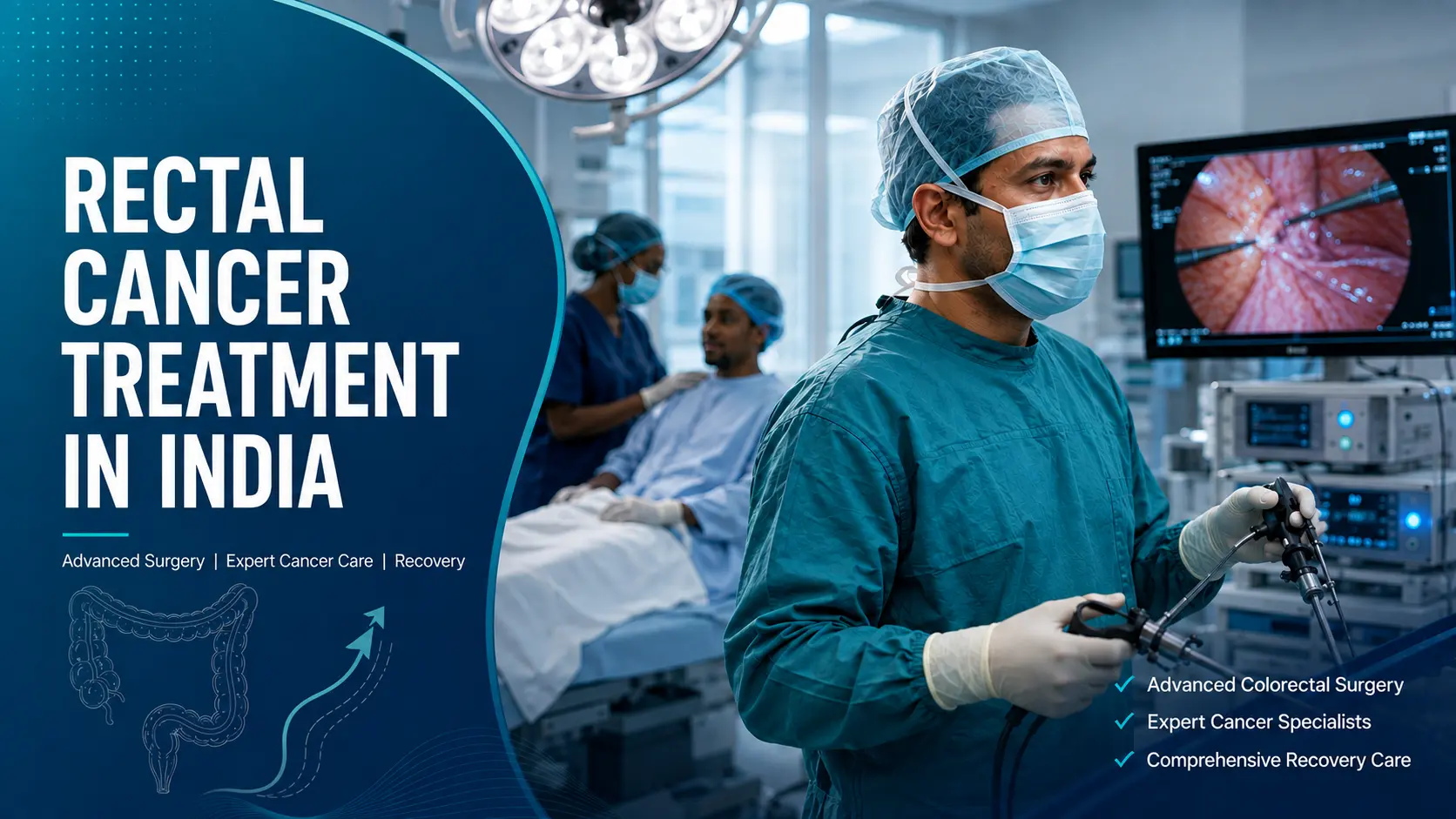
Rectal cancer treatment in India for Ethiopian patients depends on cancer stage, surgical approach, and need for chemoradiation. India offers advanced rectal cancer treatment including robotic Total Mesorectal Excision (TME), sphincter-preserving surgery, laparoscopic resection, and comprehensive chemoradiation at NABH and JCI accredited cancer centers, with five-year survival rates of 85 to 90% for Stage I and 65 to 75% for Stage III rectal cancer.
Why This Guide Matters for Ethiopian Rectal Cancer Patients
Rectal cancer is one of the most common gastrointestinal cancers globally, with rising incidence in Ethiopia. Ethiopian patients are typically diagnosed at younger ages than Western populations, with a median age of 45 to 55 years compared to 65+ in Europe and North America. Cultural taboo around discussing bowel symptoms often delays diagnosis, meaning most Ethiopian patients present at Stage II or III disease.
Ethiopian patients are usually diagnosed at Tikur Anbessa Specialized Hospital, Black Lion Hospital, or St. Paul's Hospital Millennium Medical College (SPHMMC), where colonoscopy, basic biopsy, and CT scanning are available. However, high-resolution rectal MRI, endorectal ultrasound (EUS), robotic surgery, and comprehensive multidisciplinary chemoradiation planning remain limited or unavailable in Ethiopia. Sphincter-preserving surgery, which allows patients to avoid a permanent colostomy, requires specialized training that is largely unavailable locally.
India delivers world-class outcomes with over 8,000 rectal cancer surgeries performed annually. Sphincter preservation is achieved in 75 to 85% of Indian rectal cancer cases, meaning most patients can avoid a permanent stoma. Major Indian hospitals have decades of experience treating African patients with Amharic interpreter services and dedicated colorectal oncology teams.
What is rectal cancer?
Rectal cancer is a malignant tumor that develops in the rectum, the last 15 centimeters of the large intestine that connects the colon to the anus. Although often grouped with colon cancer as "colorectal cancer," rectal cancer requires distinct surgical and treatment approaches because of the rectum's confined location within the pelvis and its proximity to the anal sphincter, urinary organs, and reproductive structures.
Most rectal cancers (approximately 95%) are adenocarcinomas that develop from adenomatous polyps in the rectal lining. Rare types include squamous cell carcinoma, carcinoid tumors, lymphoma, and sarcoma. Rectal cancer typically develops slowly over 5 to 10 years through the adenoma-to-carcinoma sequence, meaning early detection through screening can prevent most cases.
In Ethiopia, the Amharic terms commonly used include የፊንጢጣ ካንሰር (yefint'it'a kansar) for rectal cancer and የትልቁ አንጀት ካንሰር for large bowel cancer. Global incidence continues to rise, particularly in younger patients, with Ethiopian populations showing similar early-onset patterns.
What are the symptoms of rectal cancer?
The most common symptoms of rectal cancer include rectal bleeding or blood in the stool (bright red or dark), change in bowel habits (diarrhea, constipation, or narrower "pencil-thin" stools), a feeling that the bowel doesn't empty completely (tenesmus), abdominal cramping or pelvic discomfort, and unexplained weight loss. Advanced symptoms include persistent pelvic pain, weakness and fatigue from anemia, and symptoms of metastasis to liver or lungs.
Rectal cancer symptoms are frequently ignored or misdiagnosed in Ethiopia due to cultural discomfort discussing bowel symptoms. Rectal bleeding is commonly attributed to hemorrhoids, dismissed as "internal heat," or treated with traditional remedies before medical evaluation. This cultural pattern contributes to late-stage presentation, with most Ethiopian patients diagnosed at Stage II or III when curative treatment becomes more complex.
Any adult over 40 with rectal bleeding, persistent change in bowel habits beyond 4 to 6 weeks, pencil-thin stools, or unexplained anemia should undergo colonoscopy evaluation immediately. Early-stage rectal cancer is highly curable with survival rates above 85%, while late-stage disease requires aggressive multi-modality treatment with lower success rates.
What causes rectal cancer and who is at risk?
Rectal cancer develops from a combination of genetic, lifestyle, and environmental factors. Risk factors include age (traditionally 50 to 70 years, though rising in younger adults), family history of colorectal cancer, inherited genetic syndromes (Lynch syndrome, Familial Adenomatous Polyposis, MUTYH-associated polyposis), inflammatory bowel disease (Crohn's disease, ulcerative colitis), type 2 diabetes, and history of colorectal polyps.
Modifiable lifestyle risk factors include high consumption of red meat and processed meat, low fiber diet, obesity, sedentary lifestyle, alcohol consumption, and smoking. Ethiopian patients show a distinctive pattern of younger diagnosis (median 45 to 55 years), possibly related to dietary changes, urbanization, and genetic factors that are still being studied.
For most patients, no specific cause can be identified. The focus should be on early detection through screening colonoscopy starting at age 40 to 45 for average-risk individuals, or earlier for those with family history or genetic syndromes. Regular screening can detect and remove polyps before they progress to cancer.
How is rectal cancer diagnosed?
Rectal cancer diagnosis begins with digital rectal examination followed by colonoscopy, which is the gold standard investigation. Colonoscopy allows direct visualization of the entire large bowel and biopsy of any suspicious lesion. Sigmoidoscopy or proctoscopy may be used for lesions confined to the lower rectum. Biopsy confirms the diagnosis and determines cancer type, grade, and molecular characteristics including KRAS, NRAS, BRAF mutations, and microsatellite instability (MSI) status.
Staging investigations are critical for treatment planning. High-resolution MRI of the pelvis is essential for measuring tumor location, depth of invasion, lymph node involvement, and relationship to the anal sphincter, all of which determine surgical approach and whether sphincter preservation is possible. Endorectal ultrasound (EUS) provides additional detail for early-stage tumors. CT scans of chest, abdomen, and pelvis check for distant metastasis, with PET-CT reserved for complex cases. CEA blood test serves as a baseline tumor marker for monitoring treatment response and recurrence.
In Ethiopia, colonoscopy is available at Tikur Anbessa, SPHMMC, and select private centers, but availability is limited and waiting times can be long. High-resolution rectal MRI, EUS, and comprehensive molecular testing typically require India for optimal treatment planning. Ethiopian patients often arrive in India with confirmed diagnosis but incomplete staging, which is completed within 5 to 7 days by the Indian multidisciplinary team.
What are the stages of rectal cancer?
Rectal cancer is staged from Stage 0 (carcinoma in situ, confined to the inner lining) through Stage IV (metastatic disease spread to distant organs). Stage I cancer invades into but not through the rectal wall. Stage II cancer invades through the rectal wall (IIA, IIB, IIC subtypes). Stage III cancer has spread to nearby lymph nodes (IIIA, IIIB, IIIC subtypes). Stage IV cancer has metastasized to distant organs, most commonly the liver and lungs.
Stage determines both treatment approach and prognosis. Stage 0 and Stage I are typically treated with surgery alone. Stage II and III require neoadjuvant chemoradiation followed by surgery and adjuvant chemotherapy. Stage IV is managed with combination systemic therapy, targeted therapy, and sometimes surgery for both primary tumor and metastasis. Complete MRI-based staging in India ensures accurate treatment planning and avoids both undertreatment and unnecessary aggressive intervention.
What are the main treatment options for rectal cancer?
Rectal cancer treatment typically involves a combination of surgery, chemotherapy, and radiation therapy, sequenced based on stage and tumor location. Modern treatment protocols achieve cure rates above 85% for early-stage disease and meaningful long-term survival even for advanced cases.
Surgery
Total Mesorectal Excision (TME) is the gold standard surgical procedure for rectal cancer. TME removes the tumor along with the surrounding mesorectum (the fatty tissue containing lymph nodes) as a single package, dramatically reducing local recurrence rates. Depending on tumor location, surgery may involve Low Anterior Resection (LAR) with sphincter preservation, Abdominoperineal Resection (APR) with permanent colostomy (for tumors very close to the anus), or Transanal Endoscopic Microsurgery (TEM) for very early Stage I cancers.
Modern surgical approaches include robotic surgery (using the da Vinci system for enhanced precision and superior sphincter preservation), laparoscopic surgery (minimally invasive with faster recovery), and traditional open surgery (used for complex cases). Robotic TME offers particular advantages for low rectal tumors where sphincter preservation is technically demanding.
Neoadjuvant Chemoradiation
For Stage II and III rectal cancer, chemoradiation before surgery has become standard practice. Long-course chemoradiation combines 5 to 6 weeks of daily radiation therapy with concurrent chemotherapy (usually Capecitabine). Short-course radiation delivers a higher daily dose over just 5 days. Neoadjuvant treatment shrinks the tumor, improves surgical outcomes, reduces local recurrence, and increases the chance of sphincter preservation.
Adjuvant Chemotherapy
After surgery, chemotherapy is given to eliminate any remaining cancer cells and reduce recurrence risk. Standard regimens include FOLFOX (5-FU, Leucovorin, Oxaliplatin) and CAPOX (Capecitabine plus Oxaliplatin), typically given for 4 to 6 months.
Total Neoadjuvant Therapy (TNT)
A newer approach called Total Neoadjuvant Therapy delivers all chemotherapy and radiation before surgery. TNT improves outcomes, increases complete response rates, and in select patients may allow a "Watch and Wait" approach where surgery is avoided entirely if the tumor completely disappears. Indian centers have adopted TNT protocols for appropriate patients.
Targeted Therapy and Immunotherapy
For metastatic rectal cancer, targeted therapies including Cetuximab, Panitumumab (anti-EGFR for RAS wild-type tumors), and Bevacizumab (anti-VEGF) extend survival significantly. For the small subset of rectal cancers with high microsatellite instability (MSI-high), immunotherapy with Pembrolizumab or Nivolumab has produced remarkable results, with some patients achieving complete response without any surgery.
What is Total Mesorectal Excision (TME)?
Total Mesorectal Excision is the surgical gold standard for rectal cancer, developed in the 1980s and now performed at all major Indian–centers. TME removes the rectum along with its surrounding mesorectal envelope, containing lymph nodes and blood vessels, as an intact package. This precise anatomical dissection dramatically reduced local recurrence rates from 30 to 40% (with older techniques) to under 10% with modern TME.
Robotic TME offers particular advantages including superior visualization in the narrow pelvis, precise nerve preservation (protecting urinary and sexual function), higher rates of sphincter preservation, and faster recovery. Indian surgeons have adopted robotic TME extensively, with major centers performing hundreds of cases annually. Sphincter preservation is achieved in 75 to 85% of TME cases at experienced Indian centers, allowing most patients to avoid permanent colostomy.
Which Indian hospitals are best for rectal cancer treatment for Ethiopian patients?
Leading Indian hospitals for rectal cancer treatment for Ethiopian patients include BLK Max Super Speciality Hospital Delhi, Fortis Memorial Research Institute Gurugram, Artemis Hospital, Manipal Hospital, and Paras Hospital. All operate dedicated colorectal oncology programs with robotic surgery capability, multidisciplinary tumor boards, and established international patient services.
BLK Max Super Speciality Hospital operates one of India's most experienced colorectal cancer programs with robotic TME capability and dedicated sphincter preservation expertise. Fortis Memorial Research Institute houses advanced GI oncology with robotic surgery and comprehensive chemoradiation planning. Artemis Hospital operates a Digestive and Hepatobiliary Sciences Institute with subspecialty expertise in complex rectal cancer including liver metastasis management. Manipal and Paras Hospitals run high-volume colorectal surgery programs with extensive experience treating African patients.
Hospital selection depends on tumor stage and location, need for robotic surgery, sphincter preservation priority, and family logistics. DocTrePat coordinates hospital matching through case review with the multidisciplinary team.
What is the success rate of rectal cancer treatment in India?
Five-year survival rates for rectal cancer treatment in India match leading Western centers: 85 to 90% for Stage I, 70 to 80% for Stage II, 65 to 75% for Stage III, and 15 to 25% for Stage IV disease. Sphincter preservation is achieved in 75 to 85% of cases at experienced Indian centers.
Indian outcomes match Western centers because the same evidence-based protocols, TME surgical technique, robotic technology, and modern chemotherapy regimens are used. The biggest determinant of outcome is stage at diagnosis, which is why early detection is critical. Ethiopian patients presenting at earlier stages have excellent prognosis, while those presenting at Stage III or IV benefit substantially from comprehensive Indian multidisciplinary care.
Will I need a colostomy after rectal cancer surgery?
Most Ethiopian rectal cancer patients treated in India can avoid a permanent colostomy through sphincter-preserving surgery. Sphincter preservation is achieved in 75 to 85% of cases at experienced Indian centers through modern techniques including ultra-low anterior resection, intersphincteric resection, and coloanal anastomosis.
Permanent colostomy is required only when: the tumor is within 2 to 3 centimeters of the anal sphincter, the sphincter function is already damaged, or emergency situations prevent sphincter-preserving approaches. Temporary colostomy may be created to protect the surgical connection during healing, typically reversed after 3 to 6 months.
For patients who do require a colostomy, Indian hospitals provide comprehensive ostomy nurse support, education, supplies, and psychological counseling. Modern colostomy management allows normal daily activities, work, exercise, and quality of life. However, avoiding a permanent stoma remains a major treatment goal, and India's advanced surgical capability makes this possible for most patients.
How does an Ethiopian patient travel to India for rectal cancer treatment?
First, DocTrePat receives medical reports including colonoscopy findings, biopsy pathology, MRI or CT scans, and CEA blood test results, and routes them to an Indian colorectal surgical oncologist and medical oncologist for review. A treatment plan and hospital invitation letter are provided within 48 hours. For patients with obstruction or significant bleeding, expedited 24-hour case review is available.
Second, the patient applies for an Indian medical visa at the Indian Embassy in Addis Ababa. A multi-entry medical visa is essential because rectal cancer treatment spans 6 to 9 months with multiple treatment phases. A companion visa for one attendant is essential for post-operative support.
Third, the patient flies Ethiopian Airlines from Addis Ababa Bole International Airport to Delhi, Mumbai, or Chennai depending on the chosen hospital. DocTrePat coordinates airport pickup and hospital transfer.
Treatment typically follows this timeline: initial workup (5 to 7 days), neoadjuvant chemoradiation if indicated (5 to 6 weeks), rest period for tumor response (6 to 8 weeks), surgery and recovery (3 to 4 weeks), and adjuvant chemotherapy (4 to 6 months). Total continuous time in India is 3 to 4 months minimum, with adjuvant chemotherapy potentially completed partially in Ethiopia with periodic Indian visits.
Get a Personalized Rectal Cancer Treatment Plan in India
Get a specialist second opinion, personalized treatment plan, and guidance on sphincter-preserving options from experienced Indian colorectal cancer specialists.
📱 WhatsApp: +91 96259 33363
Share Your Reports & Explore Your Treatment Options →
Frequently Asked Questions
India offers several advantages over what is currently available in Ethiopia: high-resolution rectal MRI and endorectal ultrasound for precise staging, robotic Total Mesorectal Excision surgery, sphincter-preserving techniques with 75 to 85% success rates, comprehensive chemoradiation planning, molecular testing (KRAS, NRAS, BRAF, MSI), targeted therapy and immunotherapy availability, and multidisciplinary tumor board review. Ethiopian centers provide basic colorectal surgery, but advanced technology and subspecialty expertise remain limited.
In select cases, yes. Patients with early-stage rectal cancer who achieve complete clinical response to Total Neoadjuvant Therapy (TNT) may qualify for a "Watch and Wait" approach that avoids surgery. Additionally, patients with MSI-high rectal cancer often achieve remarkable responses to immunotherapy (Pembrolizumab), sometimes without needing surgery. These approaches require careful patient selection and close monitoring at experienced Indian centers.
Total Mesorectal Excision is the gold standard surgical procedure for rectal cancer, where the rectum is removed along with the surrounding mesorectal envelope (containing lymph nodes and blood vessels) as an intact package. TME dramatically reduces local recurrence rates from 30 to 40% (with older techniques) to under 10%. Robotic TME provides enhanced precision, nerve preservation, and higher sphincter preservation rates.
Five-year survival rates for rectal cancer treated at Indian cancer centers are 85 to 90% for Stage I, 70 to 80% for Stage II, 65 to 75% for Stage III, and 15 to 25% for Stage IV disease. These outcomes match leading Western centers and depend significantly on stage at diagnosis, tumor location, response to treatment, and access to modern surgical and chemotherapy protocols.
Complete rectal cancer treatment in India typically takes 6 to 9 months, including 5 to 6 weeks of neoadjuvant chemoradiation, 6 to 8 weeks of rest before surgery, surgery with 3 to 4 weeks of recovery, and 4 to 6 months of adjuvant chemotherapy. Patients typically stay in India continuously for the first 3 to 4 months, then can complete adjuvant chemotherapy partially from Ethiopia with periodic return visits.
Most patients (75 to 85%) can avoid a permanent colostomy through sphincter-preserving surgery at experienced Indian centers. Modern techniques including ultra-low anterior resection and intersphincteric resection preserve continence in most cases. Permanent colostomy is required only when the tumor is very close to the anal sphincter or when sphincter function is already damaged. Temporary colostomy may be used briefly and reversed after 3 to 6 months.
Yes, rectal cancer is highly curable in India when diagnosed early. Stage I rectal cancer has cure rates of 85 to 90%, and Stage II and III disease achieve 65 to 80% five-year survival with comprehensive multimodality treatment. Stage IV metastatic disease is often treatable with combination therapy extending life significantly. Indian centers use the same evidence-based protocols, TME surgical technique, and modern chemotherapy regimens as leading Western hospitals.
Our team is here to help you with personalized answers, treatment guidance, and free cost estimates. Reach out anytime, we’ll respond within 24 hours.
Get in Touch Now!
.webp)