
Leukemia Treatment in India for Ethiopian Patients: Complete Guide to Types, Costs, and Care in 2026
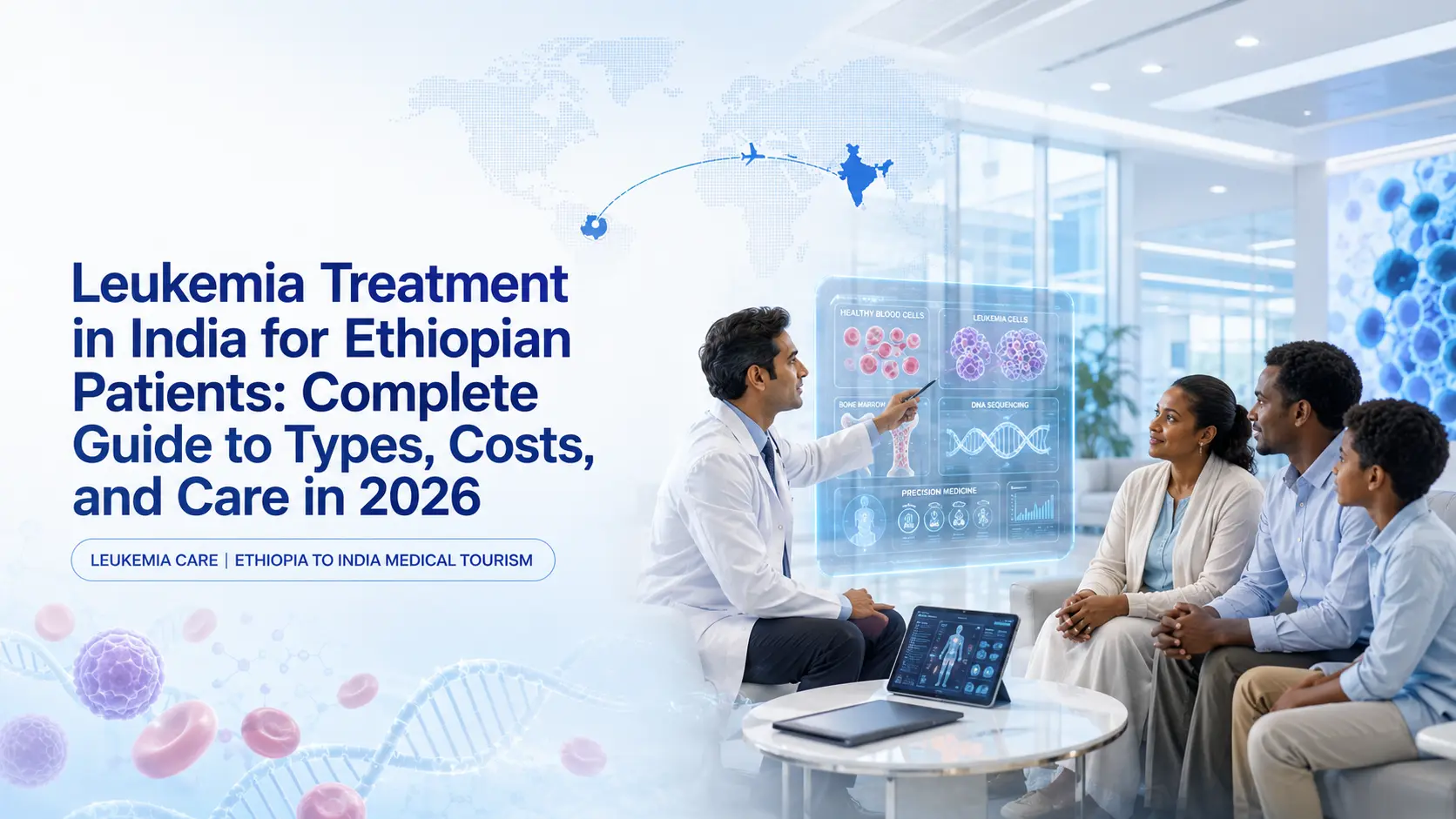
Leukemia treatment in India for Ethiopian patients costs between 350,000 and 1,960,000 Birr (USD 6,250 to USD 35,000), depending on leukemia type and whether bone marrow transplant is required. India offers full treatment protocols for all four leukemia types: ALL, AML, CLL, and CML, at NABH and JCI accredited hospitals, with five-year survival rates between 50 and 90% comparable to leading Western centers.
Why This Guide Matters for Ethiopian Patients
Leukemia is one of the most common cancers diagnosed at Tikur Anbessa Specialized Hospital, with acute myeloid leukemia the most frequent adult presentation and acute lymphoblastic leukemia the most frequent in children. Treatment capacity in Ethiopia is meaningful but limited. Standard chemotherapy is delivered at Tikur Anbessa and Bethel Teaching Hospital. Advanced protocols, including targeted therapy for chronic myeloid leukemia, CAR-T cell therapy, and allogeneic stem cell transplantation, are largely unavailable locally.
For families confronting a leukemia diagnosis, the options narrow quickly. Treatment in Europe or the United States is medically world-class but financially out of reach for most Ethiopian families, with full treatment costs commonly ranging from 5,600,000 to 16,800,000 Birr. India offers the same standardized international protocols at 60 to 75% lower cost, with NABH and JCI accredited hospitals, internationally trained hematologists, established bone marrow transplant programs, and dedicated Amharic interpreter services for African patients.
This guide covers what leukemia is, how it is classified, how it is diagnosed and treated, what each treatment costs in India, and how Ethiopian patients access care from diagnosis through long-term follow-up.
What is leukemia?
Leukemia is a cancer of the blood-forming tissues in the bone marrow that causes the body to produce abnormal white blood cells, which crowd out healthy red blood cells, white blood cells, and platelets needed for normal body function.
In a healthy body, bone marrow produces three types of blood cells. Red blood cells carry oxygen from the lungs to the body's tissues. White blood cells fight infection. Platelets help blood clot to stop bleeding. All three are produced from stem cells in the bone marrow through a tightly controlled process.
Leukemia disrupts this process. Abnormal white blood cells reproduce uncontrollably in the bone marrow. They take up space that should be used to produce healthy blood cells. As a result, the patient's blood gradually becomes deficient in functional red cells, normal white cells, and platelets. This is what causes the characteristic symptoms: low red cells means anemia and persistent fatigue. Low normal white cells means frequent and severe infections. Low platelets means easy bruising, prolonged bleeding from minor cuts, nosebleeds, and bleeding gums.
A critical distinction in leukemia is acute versus chronic. Acute leukemia progresses rapidly. The abnormal cells are immature and cannot perform any useful function. Without treatment, acute leukemia can be fatal within weeks to months. Chronic leukemia progresses slowly. The abnormal cells are more mature and retain some partial function. Chronic leukemia often allows years of management before becoming dangerous.
In Amharic, የደም ካንሰር (yedem kānsar) is the term used for blood cancer, the most commonly used name for leukemia in Ethiopia. Older patients sometimes use ሉኬሚያ (luwkēmya), the direct transliteration.
What are the four types of leukemia?
There are four main types of leukemia, classified by how quickly they progress (acute or chronic) and which type of white blood cell is affected (lymphoid or myeloid): Acute Lymphoblastic Leukemia (ALL), Acute Myeloid Leukemia (AML), Chronic Lymphocytic Leukemia (CLL), and Chronic Myeloid Leukemia (CML).
Acute Lymphoblastic Leukemia (ALL)
ALL affects lymphoid white blood cells and progresses rapidly. It is most common in children, with peak incidence between ages 2 and 5, but it also occurs in adults. ALL is the most common childhood cancer at Tikur Anbessa pediatric oncology and globally. With modern treatment, childhood ALL cure rates exceed 85%, making it one of the most treatable cancers when access to full protocol is available. Adult ALL is more challenging, with cure rates between 40 and 50%, requiring more intensive treatment and often bone marrow transplant.
Acute Myeloid Leukemia (AML)
AML affects myeloid white blood cells and progresses rapidly. It is most common in adults, with incidence increasing with age. AML is the most common adult acute leukemia presentation in Ethiopia. Cure rates with full treatment range from 35 to 65% depending on age and specific genetic features of the leukemia. Some AML subtypes, particularly acute promyelocytic leukemia (APL), have specific targeted treatments with very high cure rates.
Chronic Lymphocytic Leukemia (CLL)
CLL affects mature lymphoid white blood cells (B-cells) and progresses slowly. It is most common in older adults, with median diagnosis age around 70. CLL is less common in Ethiopia than acute leukemias but is increasing as Ethiopian life expectancy rises. Early-stage CLL often requires no immediate treatment. Many patients are managed with a "watch and wait" approach, beginning treatment only when symptoms develop or blood counts deteriorate.
Chronic Myeloid Leukemia (CML)
CML affects myeloid white blood cells and progresses slowly. It is most common in adults aged 50 to 60. The defining feature of CML is the Philadelphia chromosome, an abnormal chromosome present in over 95% of cases. The discovery of targeted drugs called tyrosine kinase inhibitors (TKIs) has transformed CML from a previously fatal disease into a manageable chronic condition. Most CML patients on daily TKI medication today have life expectancy comparable to age-matched peers without leukemia.
Less common forms
Several rarer leukemias exist including hairy cell leukemia, acute promyelocytic leukemia (a treatable AML subtype), and adult T-cell leukemia/lymphoma. These require specialized treatment approaches and are best managed at high-volume hematology-oncology centers.
What causes leukemia?
Leukemia is caused by DNA mutations in bone marrow cells that lead to uncontrolled production of abnormal white blood cells. Causes include genetic factors, environmental exposures, certain viral infections, prior cancer treatment, and in many cases, unknown triggers.
Inherited genetic syndromes including Down syndrome, Li-Fraumeni syndrome, and Fanconi anemia increase leukemia risk. Family history of leukemia increases risk modestly. However, the majority of leukemia cases occur in patients with no family history.
Environmental exposures linked to leukemia include benzene (an industrial chemical also present in cigarette smoke), high-dose radiation exposure such as atomic bomb survivors or patients who received radiation therapy for prior cancers, and certain pesticides and agricultural chemicals.
Tobacco use is associated with increased risk of AML in adults. This is relevant context for Ethiopia where tobacco consumption is rising particularly in urban areas.
Viral infections cause some leukemias. Human T-lymphotropic virus type 1 (HTLV-1) causes adult T-cell leukemia in a subset of infected patients. Epstein-Barr virus (EBV) is associated with certain rare leukemia subtypes.
Prior cancer treatment can rarely cause "treatment-related" leukemia years after chemotherapy or radiation therapy for another cancer. This risk is real but should not deter cancer treatment when needed; the benefit of treating an active cancer far outweighs the small future risk.
In the majority of leukemia cases, no specific cause can be identified. This is important for Ethiopian families to hear clearly. Patients and families should not blame themselves, their diet, their environment, or specific past events for the diagnosis. Leukemia happens, often without warning, to people who have done nothing to cause it.
What are the early symptoms of leukemia?
Early leukemia symptoms include persistent fatigue, frequent infections, easy bruising or bleeding, bone or joint pain, swollen lymph nodes, fever, unexplained weight loss, and pale skin. These symptoms are often misdiagnosed as anemia, typhoid, malaria, or other common infections in Ethiopia.
The general symptoms of leukemia reflect what the abnormal cells are doing to the bone marrow. Persistent fatigue that does not improve with rest occurs because anemia from low red blood cells reduces oxygen delivery to tissues. Frequent or severe infections occur because normal white blood cells are crowded out and cannot fight pathogens effectively. Easy bruising, prolonged bleeding from minor cuts, nosebleeds, and bleeding gums occur because platelet counts are low. Bone or joint pain occurs because abnormal cells are crowding the bone marrow space. Swollen lymph nodes in the neck, armpits, or groin can occur as leukemia cells accumulate in lymph tissue. Persistent fever, unexplained weight loss, pale skin, night sweats, and shortness of breath with mild exertion are also common.
Small red spots under the skin called petechiae are a particularly important sign because they indicate platelets are critically low. Petechiae appear as tiny red dots that do not fade when pressed.
Specific leukemia types present in characteristic ways. Childhood ALL often presents with bone pain causing a child to limp or refuse to walk. AML can present with gum swelling or skin nodules called leukemia cutis. CLL may be detected on routine blood tests before symptoms develop. CML often presents with a feeling of fullness or discomfort on the left side of the abdomen caused by an enlarged spleen.
Critical warning for Ethiopian patients
Many leukemia symptoms are commonly misdiagnosed in Ethiopia because they overlap with malaria, typhoid, brucellosis, tuberculosis, and other widespread infectious diseases. A patient who presents with fatigue, fever, and weight loss is often treated for one of these conditions first. When the initial treatment does not work, more medications may be added before blood work is ordered.
The most important diagnostic step is also the simplest. If a patient presents with persistent fatigue, frequent infections, unexplained bruising, or bleeding, request a complete blood count (CBC). The CBC is inexpensive, widely available at Tikur Anbessa, SPHMMC, Bethel Hospital, and most private laboratories in Addis Ababa, and it provides the first concrete signal of leukemia. An abnormal CBC showing very high or very low white blood cell counts, low hemoglobin (anemia), and low platelets is the alarm bell.
Patients and families should insist on a CBC when symptoms persist beyond two weeks of failed treatment for assumed conditions. Many leukemia diagnoses in Ethiopia are delayed by weeks or months because this simple test was not ordered early enough. Early diagnosis dramatically improves outcomes. A leukemia caught early, before complications develop, is more treatable than the same leukemia caught after weeks of misdirected treatment for other diseases.
How is leukemia diagnosed?
Leukemia is diagnosed through a complete blood count (CBC) showing abnormal blood cell levels, followed by bone marrow biopsy to confirm the diagnosis and identify the specific leukemia type, with additional cytogenetic and molecular tests to guide treatment.
The diagnostic process begins with a blood test. The CBC reveals the first abnormalities. A peripheral blood smear, in which a drop of blood is examined under a microscope, can show abnormal cell shapes and types. This is often the first concrete signal that leukemia is present.
Bone marrow biopsy is the definitive diagnostic test. A small sample of bone marrow is extracted from the hip bone using a thin needle. The procedure is done under local anesthesia and takes 20 to 30 minutes. Most patients describe it as briefly uncomfortable but tolerable. The bone marrow is examined under a microscope to identify the percentage of abnormal cells and to determine which type of leukemia is present.
Cytogenetic and molecular tests are performed on the bone marrow sample to identify specific genetic features of the leukemia. Chromosome analysis identifies abnormalities such as the Philadelphia chromosome that defines CML. Flow cytometry identifies cell surface markers that determine leukemia subtype. Molecular tests (FISH, PCR) detect specific genetic mutations such as FLT3 in AML or BCR-ABL in CML. These tests are essential because they determine which targeted therapies will work for the specific leukemia subtype.
Imaging is used to assess organ involvement. Chest X-ray and CT scan check for enlarged lymph nodes or organ infiltration. Ultrasound assesses the spleen and liver. Lumbar puncture (spinal tap) is performed for ALL to check whether leukemia has spread to the central nervous system, which would require additional treatment.
Diagnostic capacity in Ethiopia versus India
Basic CBC and peripheral smear are widely available across Ethiopia. Bone marrow biopsy is available at Tikur Anbessa, SPHMMC, and select private hospitals, though capacity is limited and waiting times can extend to weeks. Cytogenetic and molecular testing is very limited in Ethiopia. Samples are often sent abroad for analysis, which delays definitive diagnosis by weeks. Comprehensive workup including flow cytometry, full molecular profiling, and targeted mutation testing is routinely available in India within 3 to 5 days of arrival.
Many Ethiopian patients arrive in India with a confirmed leukemia diagnosis but require comprehensive re-staging for treatment planning. Indian hematology-oncology centers complete this workup quickly and begin treatment immediately based on full molecular information rather than basic morphology alone.
What are the stages and risk groups of leukemia?
Unlike solid tumor cancers that use a stage system, leukemia is classified into risk groups (low, intermediate, high) based on age, white blood cell count, cytogenetic findings, and response to initial treatment. Risk group determines treatment intensity.
Why leukemia uses risk groups rather than stages: leukemia is a blood cancer that affects the whole body from the start. Traditional "spread to nearby tissue" staging does not apply. Risk grouping focuses on prognosis and treatment intensity.
The risk factors that determine grouping include age at diagnosis (younger generally indicates better prognosis with some exceptions), white blood cell count at diagnosis (very high counts indicate higher risk), cytogenetic abnormalities (some chromosome patterns indicate favorable prognosis, others unfavorable), specific genetic mutations identified by molecular testing, response to initial chemotherapy (achieving complete remission early is the strongest favorable indicator), and whether leukemia cells are found in the central nervous system.
Risk groups guide treatment intensity. Low risk patients typically receive standard chemotherapy protocol. Bone marrow transplant may not be needed. Intermediate risk patients receive intensified chemotherapy, with transplant considered based on response. High risk patients receive the most aggressive chemotherapy, and bone marrow transplant is typically recommended in first remission.
CLL is an exception. It uses the Rai or Binet staging system based on lymph node involvement, anemia, and platelet count. Early-stage CLL often does not require immediate treatment. The "watch and wait" approach is standard until disease progresses.
What are the main treatment options for leukemia?
The main leukemia treatments include chemotherapy, targeted therapy, immunotherapy, radiation therapy, and bone marrow transplant. The specific combination is determined by leukemia type, risk group, and patient health.
Chemotherapy
Chemotherapy is the foundation of leukemia treatment. For acute leukemias, treatment typically follows three phases over 2 to 3 years. Induction is 4 to 6 weeks of intensive treatment to achieve remission. Consolidation is several months of treatment to deepen remission. Maintenance is 1 to 2 years of lower-dose treatment to prevent relapse. Chemotherapy is delivered through IV infusion, oral tablets, or sometimes directly into spinal fluid for ALL patients with central nervous system involvement.
Common side effects include hair loss, fatigue, nausea, lowered immunity, and increased infection risk. Modern protocols manage these side effects with supportive medications including anti-nausea drugs, growth factors to support blood cell recovery, and prophylactic antibiotics. Most patients tolerate chemotherapy meaningfully better than they expect.
Targeted therapy
Targeted therapy uses drugs that attack specific features of leukemia cells. For CML, tyrosine kinase inhibitors (Imatinib also known as Gleevec, Dasatinib, Nilotinib) have transformed treatment. Most CML patients achieve long-term remission on daily oral medication and live with normal life expectancy. For ALL, targeted drugs against specific genetic mutations are increasingly used. For AML, newer targeted agents for specific mutations including FLT3, IDH1, and IDH2 are now available. Targeted therapies generally cause fewer side effects than chemotherapy because they act more precisely on cancer cells.
Immunotherapy
Immunotherapy uses drugs that help the immune system attack leukemia cells. Monoclonal antibodies such as Rituximab are used for some CLL cases. CAR-T cell therapy is a transformative new treatment for relapsed ALL in which a patient's own immune cells are genetically modified in a laboratory to recognize and attack leukemia cells. CAR-T is available at select Indian centers including major partner hospitals, with outcomes comparable to leading Western institutions, at a fraction of the cost.
Radiation therapy
Radiation therapy is used selectively in leukemia, mainly for total body irradiation as preparation for bone marrow transplant, treating leukemia in the central nervous system, and reducing pain from leukemia cells in bone.
Bone marrow transplant (stem cell transplant)
Bone marrow transplant replaces diseased bone marrow with healthy stem cells. Autologous transplant uses the patient's own cells, harvested before chemotherapy. Allogeneic transplant uses cells from a matched donor, either a sibling or unrelated donor from international registries. Transplant is used for high-risk acute leukemias, relapsed leukemias, and some advanced CML cases. It is a significant treatment requiring 4 to 8 weeks hospitalization, with recovery extending 6 to 12 months. India is one of the world's largest providers of bone marrow transplant, performing over 3,500 transplants annually at a fraction of Western costs.
Most Ethiopian patients require a combination of these modalities. The specific protocol is determined by the Indian hematology-oncology team after comprehensive workup, with the goal of achieving sustained remission for acute leukemias or long-term control for chronic leukemias.
When is bone marrow transplant needed for leukemia?
Bone marrow transplant is recommended for high-risk acute leukemias that have a high chance of relapse with chemotherapy alone, for leukemias that have relapsed after initial treatment, and for some chronic leukemias that no longer respond to targeted therapy.
Transplantation is typically recommended for high-risk AML in first remission, high-risk ALL in first remission, any acute leukemia that has relapsed after initial treatment, CML that has progressed beyond chronic phase or no longer responds to TKIs, and certain rare leukemia subtypes with poor prognosis.
Transplant is typically not needed for standard-risk childhood ALL with good early response, low-risk AML in older patients where transplant risks may outweigh benefits, most CLL cases (transplant is rarely needed in CLL), and most CML cases successfully managed with TKIs.
Autologous transplant carries lower risk and allows faster recovery but is used for specific leukemia subtypes only. Allogeneic transplant carries higher risk but offers greater curative potential and is used for most high-risk acute leukemias. Allogeneic transplant requires finding a matched donor.
Donor availability is a critical question. An HLA-matched sibling provides the ideal donor, but only 25% of patients with a sibling will find a match. Unrelated donor registries internationally identify additional matched donors, though African patient representation in these registries is limited, making unrelated donor search more challenging for Ethiopian patients. Half-matched relative (haploidentical) transplant is an option when no full match is available. This procedure has improved dramatically over the past decade and is increasingly successful in Indian centers, where it is performed routinely and at world-class outcomes. Cord blood transplant offers another option for patients without traditional matches.
Bone marrow transplant for Ethiopian patients is virtually unavailable in Ethiopia. India performs over 3,500 transplants annually with outcomes comparable to Western centers. Cost is 60 to 75% lower than equivalent transplant in Western hospitals.
For comprehensive information on the transplant process, read our complete guide to bone marrow transplant in India for Ethiopian patients.
How is leukemia treated in India for international patients?
Leukemia treatment in India for international patients follows internationally standardized protocols at NABH and JCI accredited hematology-oncology centers. Multidisciplinary teams including hematologists, transplant physicians, and pathologists manage each case from diagnosis through long-term follow-up.
Before arrival, medical reports including CBC, bone marrow biopsy results if available, and any cytogenetic or molecular test results from Ethiopia are sent to an Indian hematologist for review. Initial assessment and treatment plan recommendation are provided within 48 hours along with cost estimate. For acute leukemia requiring immediate treatment, expedited 24-hour case review is available.
Upon arrival in India, comprehensive workup begins immediately. Bone marrow biopsy is repeated if results from Ethiopia are incomplete or older than 2 weeks. Cytogenetic analysis, flow cytometry, and molecular profiling are completed within 3 to 5 days. Risk group is established based on full diagnostic information.
A multidisciplinary tumor board reviews the case. The treating hematologist consults with transplant specialists, infectious disease specialists, and supportive care teams to finalize the protocol.
Induction chemotherapy typically begins within 7 to 10 days of arrival. The patient is admitted for 4 to 6 weeks during induction with close monitoring of blood counts, infection prevention, and supportive care including transfusions and antibiotics as needed.
Following induction, the patient is reassessed. Bone marrow biopsy confirms remission status. Treatment continues with consolidation chemotherapy, transplant preparation, or transition to maintenance or targeted therapy depending on diagnosis and response.
Specific features of Indian leukemia treatment that benefit Ethiopian patients include all major TKIs for CML available at a fraction of Western prices, CAR-T cell therapy available for relapsed ALL at select centers, haploidentical bone marrow transplant available for patients without HLA-matched donors, generic chemotherapy drugs at significantly lower cost than branded equivalents, Amharic interpreter services at major hematology-oncology centers, pediatric hematology-oncology specialty for childhood leukemia, and Ethiopian community presence in Delhi and Mumbai providing family support during extended treatment.
How much does leukemia treatment cost in India by type?
Leukemia treatment costs in India for Ethiopian patients range from 350,000 Birr for CML on targeted therapy to 1,960,000 Birr for full allogeneic bone marrow transplant for high-risk acute leukemias.
What is included in these costs: hematologist and oncologist fees, hospitalization, chemotherapy drugs, transplant procedure costs, supportive care medications, and post-treatment review for the first 30 days.
What is not included: travel and accommodation, food, attendant expenses, ongoing TKI medications after the first year for CML, donor search fees if unrelated donor registry search is required (typically 168,000 to 280,000 Birr additional), and post-treatment medications for return to Ethiopia.
Cost ranges are based on DocTrePat partner hospital indicative quotes as of June 2026. Exchange rates: 1 USD = 56 Birr = 83 INR. Actual treatment cost requires personalized assessment after comprehensive workup.
Get a personalized leukemia treatment cost estimate based on your reports within 48 hours. Message us on WhatsApp.
What additional costs should Ethiopian families plan for?
Beyond treatment, Ethiopian leukemia families typically budget 84,000 to 280,000 Birr (USD 1,500 to USD 5,000) for extended stay in India during induction chemotherapy and transplant recovery, plus travel, accommodation, food, and attendant expenses.
Leukemia treatment carries higher additional costs than most other cancers because of the extended treatment timeline. Induction chemotherapy requires 4 to 6 weeks of hospitalization. Bone marrow transplant requires 6 to 8 weeks of hospitalization plus 3 to 6 months of close follow-up. Multiple cycles of consolidation chemotherapy require returning to India 4 to 6 times over 6 to 12 months, or alternatively an extended single stay. One family member typically accompanies the patient throughout.
DocTrePat coordinates extended-stay accommodation at preferential rates, multi-entry visa support, Amharic interpreter throughout the extended stay, and family support coordination free of charge for Ethiopian patients.
Which Indian hospitals are best for leukemia treatment for Ethiopian patients?
Leading Indian hospitals for leukemia treatment for Ethiopian patients include BLK Max Hospital Delhi, Fortis Memorial Research Institute Gurugram, Medanta The Medicity, and Apollo Hospitals. All four are NABH and JCI accredited with dedicated hematology-oncology departments and bone marrow transplant programs.
BLK Max Super Specialty Hospital operates one of North India's largest hematology-oncology departments with a high-volume bone marrow transplant program performing over 200 transplants annually with internationally comparable outcomes. Lead hematologists at BLK Max have international fellowship training, and the hospital offers Amharic interpreter services along with established protocols for African patient management.
Fortis Memorial Research Institute Gurugram operates the BMT Cancer Centre with advanced capability for both standard and haploidentical bone marrow transplants. The center has treated leukemia patients from across Africa and has clinical experience with the specific challenges Ethiopian patients face, including TKI medication access continuity after returning home.
Medanta The Medicity houses the Medanta Cancer Institute with specialized hematology-oncology and pediatric oncology departments. The institute offers CAR-T cell therapy for select relapsed ALL cases. Pediatric leukemia care is particularly strong, with dedicated pediatric hematologists experienced in treating childhood ALL.
Apollo Hospitals Chennai operates one of India's most established hematology-oncology programs with decades of experience treating international leukemia patients. Apollo's transplant program performs over 100 transplants annually with outcomes published in peer-reviewed journals.
Hospital selection for each Ethiopian leukemia patient is based on specific leukemia type, transplant requirement, donor availability, and consultant team match rather than a generic preference. DocTrePat manages hospital selection through case review with the treating hematology-oncology team.
What is the success rate of leukemia treatment in India?
Five-year survival rates for leukemia treatment in India range from 50 to 90% depending on type, age, and risk group. Childhood ALL achieves the highest outcomes and high-risk adult AML the most variable.
Outcomes depend significantly on response to induction chemotherapy, presence of specific genetic mutations, age, overall health at diagnosis, and access to bone marrow transplant when needed. Indian outcomes are comparable to Western centers because the same protocols, drugs, and transplant techniques are used.
For Ethiopian patients specifically, when leukemia patients reach Indian centers at any stage, the same treatment standards apply as for any international patient. Earlier diagnosis improves outcomes substantially, which is why the diagnostic and symptom recognition sections of this guide emphasize urgency in seeking blood work when symptoms persist.
How does an Ethiopian patient travel to India for leukemia treatment?
Ethiopian leukemia patients travel to India by obtaining an Indian medical visa (multi-entry preferred for the extended treatment course), flying Ethiopian Airlines to Delhi or Mumbai, and being received at the airport by their hospital coordinator for direct transfer to the hematology-oncology unit.
First, DocTrePat receives medical reports and routes them to an Indian hematology-oncology team for review. Treatment plan, cost estimate, and hospital invitation letter are provided within 48 hours. For acute leukemia cases requiring immediate treatment, expedited 24-hour case review is available.
Second, the patient applies for an Indian medical visa at the Indian Embassy in Addis Ababa. Standard processing is 5 to 10 working days. Urgent cases can be expedited to 2 to 3 days with hospital support and medical urgency documentation. A multi-entry visa is recommended for leukemia patients because treatment typically requires multiple visits over 6 to 24 months. A companion visa for one attendant is processed simultaneously.
Third, the patient books Ethiopian Airlines from Addis Ababa Bole International Airport to either Indira Gandhi International Airport in Delhi or Chhatrapati Shivaji International Airport in Mumbai. DocTrePat coordinates airport pickup and direct transfer to the hospital. For acutely ill patients, ambulance pickup is arranged from the airport directly to the hematology-oncology unit.
Acute leukemia requires treatment to begin within days to weeks of diagnosis. For newly diagnosed acute leukemia (AML or ALL), the standard timeline of 14 to 21 days from first contact to treatment start can be compressed to 7 to 10 days when medical urgency requires it. DocTrePat prioritizes acute leukemia cases for expedited coordination.
What about follow-up after returning to Ethiopia?
Post-leukemia treatment follow-up for Ethiopian patients includes scheduled remote consultations with the treating Indian hematologist, monthly blood monitoring at local Ethiopian laboratories, coordination with local Ethiopian hematologists, and ongoing TKI medication management for CML patients.
For acute leukemia in remission: monthly CBC and clinical assessment for the first 6 months, then every 2 to 3 months for years 2 to 3, then every 6 months for years 4 to 5, then annually. Bone marrow biopsy is performed at 3 months, 6 months, and 12 months post-treatment to confirm sustained remission.
For CML on TKI therapy: monthly CBC for the first 6 months, then quarterly. PCR test for BCR-ABL transcript every 3 months to monitor treatment response. TKI medication continues daily indefinitely for most patients.
For CLL: clinical assessment every 3 to 6 months, CBC quarterly.
Local Ethiopian hematology coordination is essential. DocTrePat helps connect Ethiopian patients with hematologists at Tikur Anbessa, Bethel Hospital, or private specialists in Addis Ababa. The Indian treating team shares the comprehensive care plan with the local Ethiopian doctor, ensuring continuity of care.
TKI medication continuity for CML patients is managed actively. Imatinib (Gleevec) and other TKIs are available in Ethiopia at higher cost than in India. DocTrePat helps families source medications, arrange shipment from India where it is cost-effective, and coordinate with local pharmacies for ongoing prescriptions. Some patients return to India annually for comprehensive evaluation while maintaining daily medication locally.
Remote consultation through WhatsApp video calls and secure file sharing for blood test results and bone marrow biopsy reports allows ongoing case management without travel. The assigned case manager who guided the patient through treatment remains the patient's point of contact throughout the survivorship period.
Take the Next Step
Get a personalized leukemia treatment cost estimate within 48 hours. Share your reports on WhatsApp and an Indian hematology-oncology specialist will review your case and provide a complete treatment plan and cost estimate.
WhatsApp: +91 96259 33363 - Get a Free Second Opinion
Frequently Asked Questions
Acute leukemia (AML, ALL) requires treatment within days to weeks. DocTrePat compresses the standard 14 to 21 day process to 7 to 10 days for urgent cases, with 24-hour expedited case review and ambulance transfer from the airport when medically necessary.
Acute leukemia treatment runs 2 to 3 years total (induction, consolidation, maintenance), but induction requiring hospital stay is 4 to 6 weeks; many patients return home between chemotherapy cycles. CML on TKIs is managed mostly remotely after initial workup, with periodic monitoring.
Only about 25% of patients find a sibling match. Indian centers routinely perform haploidentical (half-matched) transplants with outcomes that have improved significantly, plus unrelated donor registry searches and cord blood options when no full match exists.
Often yes. CML is usually managed long-term with daily TKI medication alone. Standard-risk childhood ALL and low-risk AML in older patients frequently respond to chemotherapy without transplant. Transplant is generally reserved for high-risk or relapsed cases.
Costs range from 280,000 Birr for CML on targeted therapy up to 1,960,000 Birr for full allogeneic bone marrow transplant in high-risk acute leukemia. Transplant, when needed, is priced separately within that range and depends on donor type (matched, haploidentical, or unrelated).
Our team is here to help you with personalized answers, treatment guidance, and free cost estimates. Reach out anytime, we’ll respond within 24 hours.
Get in Touch Now!
.webp)