
Brain Tumor Symptoms in Adults: When to Seek Treatment in India

Brain tumor symptoms in adults commonly include persistent or worsening headaches, seizures, vision or speech changes, weakness on one side of the body, personality or memory changes, and nausea that is worse in the morning. Any new neurological symptom lasting more than one to two weeks, or a first-ever seizure in an adult, warrants urgent brain imaging (CT or MRI). Ethiopian patients needing advanced neurosurgery, radiosurgery, or complex tumor removal often seek care in India, where NABH and JCI accredited centers treat the full range of brain tumors at 60 to 75% lower cost than Western hospitals.
Why This Guide Matters for Ethiopian Patients
Brain tumor symptoms are easy to dismiss. A headache is treated as stress or dehydration. Blurred vision is blamed on tired eyes. A change in mood is attributed to work or family pressure. By the time many Ethiopian patients receive a scan, the tumor has grown enough to cause pressure inside the skull.
Neurosurgical capacity in Ethiopia has grown, with services at Tikur Anbessa Specialized Hospital, Myungsung Christian Medical Center (MCM), and Zewditu Hospital. But capacity remains limited relative to need. Advanced procedures including awake craniotomy, stereotactic radiosurgery (Gamma Knife and CyberKnife), neuro-navigation-guided resection, and complex skull base surgery are constrained or unavailable, and waiting times for non-emergency surgery can extend for months.
India performs a very high volume of neurosurgery each year at internationally accredited centers, using the same imaging, surgical, and radiation technology found in Western hospitals. This guide explains the warning signs of a brain tumor in adults, which symptoms are emergencies, how brain tumors are diagnosed, and when travelling to India for treatment makes sense.
In Amharic, a brain tumor is commonly described as የአንጎል ዕጢ (ye-angol iti), meaning growth or tumor of the brain.
What are the early warning signs of a brain tumor in adults?
The early warning signs of a brain tumor in adults are new or changing headaches, a first seizure, gradual weakness or numbness on one side of the body, vision or speech difficulty, and changes in memory, concentration, or personality. These symptoms appear because a growing tumor either presses on brain tissue or raises pressure inside the skull.
Headaches are the most common symptom, but most headaches are not tumors. The concerning pattern is a headache that is new for that person, steadily worsening over weeks, worse in the early morning or when lying down, or accompanied by vomiting, vision changes, or weakness. A brain tumor headache does not usually come alone; it travels with other neurological signs.
Seizures are one of the most important warning signs. A first-ever seizure in an adult with no prior epilepsy should always trigger brain imaging. Roughly a third of adults with a brain tumor first present with a seizure.
Focal neurological changes reflect the tumor's location. Weakness or numbness on one side of the body, difficulty speaking or understanding speech, loss of part of the visual field, unsteadiness or loss of balance, and clumsiness in one hand all point to a specific area of the brain under pressure.
Cognitive and personality changes are frequently missed. Gradual memory loss, difficulty concentrating, confusion, and out-of-character changes in mood or behaviour can be the first sign of a tumor in the frontal lobe. Families often notice these before the patient does.
Which brain tumor symptoms are a medical emergency?
Certain brain tumor symptoms are medical emergencies requiring immediate hospital care: a seizure lasting more than five minutes or repeated seizures, sudden severe headache unlike any before, sudden loss of vision or double vision, sudden weakness or paralysis, difficulty speaking, persistent vomiting with drowsiness, and any decline in consciousness or alertness.
These signs can indicate dangerously raised pressure inside the skull or bleeding into a tumor, both of which can become life-threatening quickly. Do not wait to see if they improve. Go immediately to the nearest hospital with a CT scanner and neurosurgical or emergency capability. In Addis Ababa, this includes Tikur Anbessa, MCM, and major private hospitals.
For chronic symptoms developing gradually over weeks, a slowly worsening headache, subtle personality change, or mild one-sided weakness, the situation is less immediately dangerous but still requires prompt evaluation with brain imaging rather than waiting.
What symptoms are often mistaken for other conditions in Ethiopia?
Brain tumor symptoms in Ethiopia are frequently mistaken for migraine, hypertension, stress, psychiatric illness, or infections such as meningitis and neurocysticercosis, because these conditions are far more common and share overlapping symptoms.
A worsening headache is often treated as tension or high blood pressure. A first seizure may be attributed to infection or, in some communities, to non-medical explanations, delaying imaging. Personality or memory changes are sometimes managed as a psychiatric condition without a scan. Vision changes are sent to an optician rather than a neurologist.
The single most useful step when neurological symptoms persist beyond one to two weeks, or when an adult has a first seizure, is to request brain imaging. A CT scan is widely available in Addis Ababa and gives the first concrete answer. MRI provides far more detail and is the definitive test. Insisting on a scan early, rather than after weeks of treatment for an assumed condition, is what changes outcomes.
How is a brain tumor diagnosed?
A brain tumor is diagnosed through neurological examination followed by brain imaging, CT scan for the first assessment and MRI for detailed evaluation, with a biopsy or surgery required to confirm the tumor type and whether it is benign or malignant.
CT scan is fast, widely available, and good for detecting a mass, bleeding, or raised pressure, making it the usual first test in an emergency. MRI with contrast is the gold standard, showing the tumor's exact size, location, and relationship to critical brain structures, and is essential for surgical planning. Advanced imaging including MR spectroscopy, functional MRI, and PET is used to characterise tumors further and is routinely available in India. The definitive diagnosis comes from examining tumor tissue under a microscope, obtained either by needle biopsy or during surgical removal, which determines the grade and guides treatment.
Basic CT and MRI are available in Addis Ababa, though MRI capacity and advanced sequences are limited. Comprehensive neuro-pathology and molecular tumor profiling are often not available locally. Many Ethiopian patients arrive in India with a scan already showing a mass and complete the full workup and treatment planning there.
When should an Ethiopian patient consider brain tumor treatment in India?
An Ethiopian patient should consider brain tumor treatment in India when surgery involves a complex or high-risk location, when stereotactic radiosurgery (Gamma Knife or CyberKnife) is recommended, when advanced neuro-navigation or awake surgery is needed, when local waiting times are unsafe for the tumor's growth rate, or when a second opinion is wanted before major surgery.
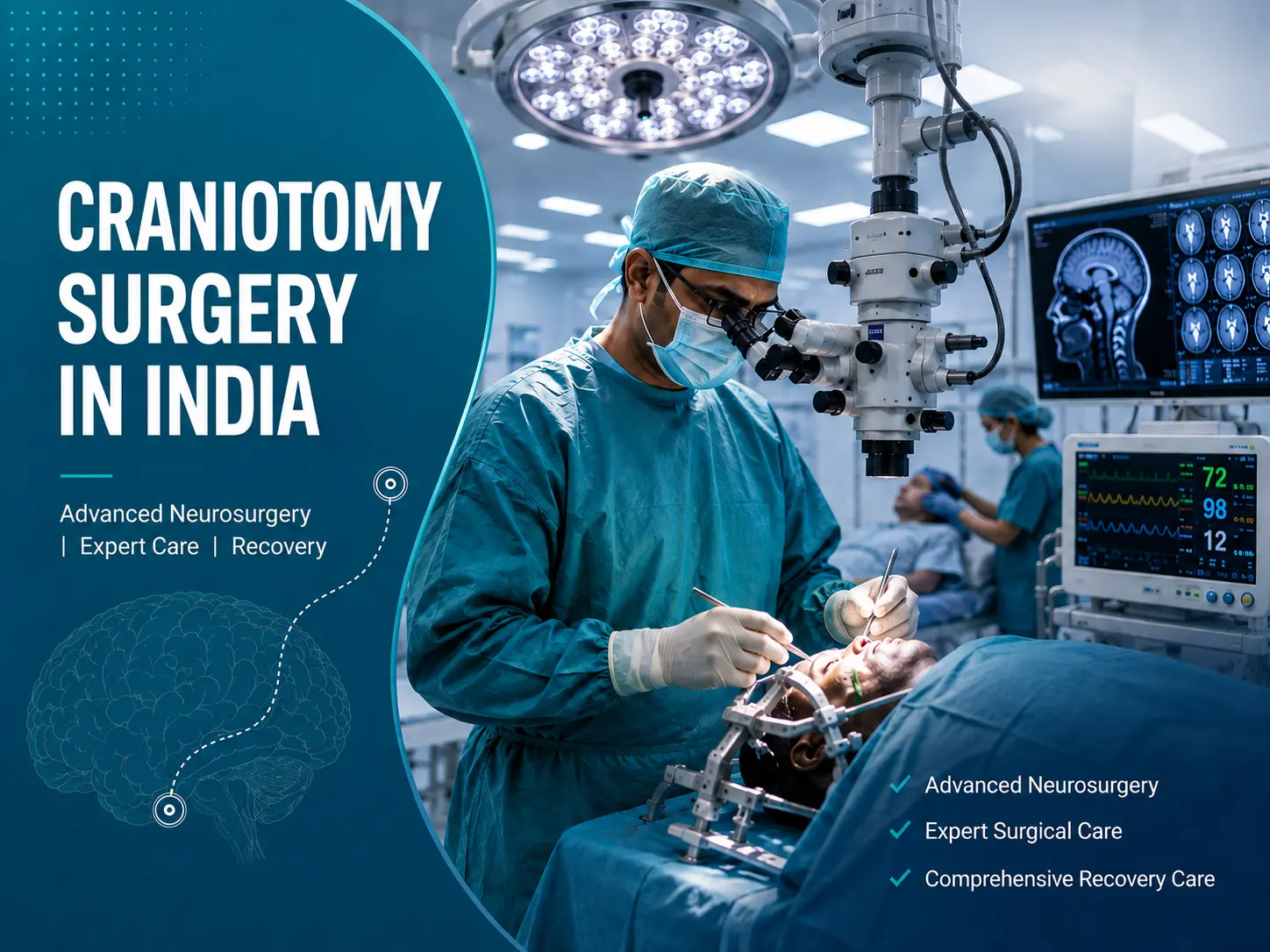
Indian neurosurgical centers offer capabilities that are limited or unavailable in Ethiopia, including image-guided and neuro-navigation-assisted tumor removal, awake craniotomy for tumors near speech and movement centers, Gamma Knife and CyberKnife radiosurgery for tumors difficult to reach surgically, comprehensive neuro-pathology and molecular profiling, and integrated neuro-oncology teams combining neurosurgery, radiation oncology, and medical oncology.
Local treatment in Ethiopia remains appropriate for initial emergency stabilisation, straightforward tumors within local surgical capacity, and long-term follow-up after treatment abroad. The decision depends on the tumor type, location, growth rate, and the specific expertise a case requires. A brain scan reviewed by an Indian neurosurgeon can clarify which pathway fits, usually within 48 hours.
Take the Next Step
If you or a family member has a brain scan showing a mass, or persistent neurological symptoms under investigation, an Indian neurosurgeon can review the reports and advise on whether treatment in India is warranted, what it would involve, and the likely cost, typically within 48 hours.
Learn more about neurosurgery treatment in India for international patients, or share your scan and reports for a free specialist review.
WhatsApp: +91 96259 33363 Get a Free Second Opinion
Frequently Asked Questions
Our team is here to help you with personalized answers, treatment guidance, and free cost estimates. Reach out anytime, we’ll respond within 24 hours.
Get in Touch Now!
.webp)